
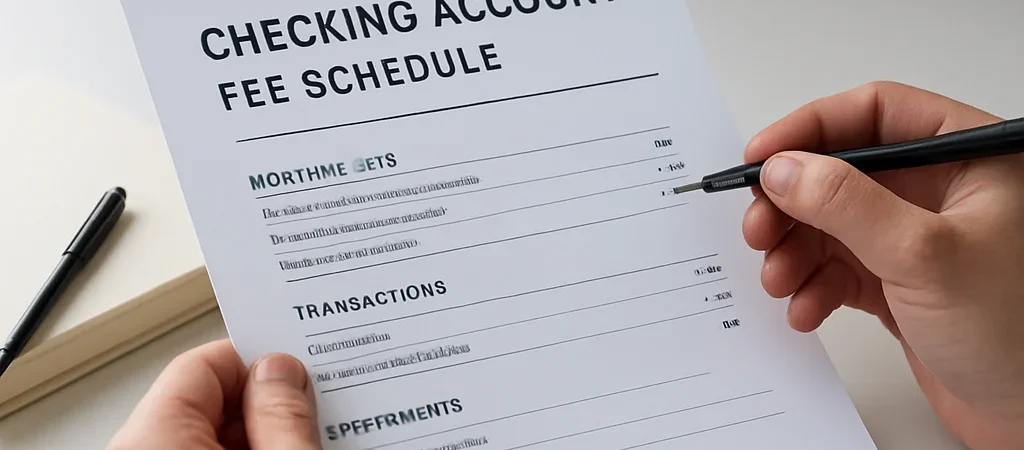
The first detail many people notice is whether a checking account advertises a monthly fee. But the more useful question is what it takes to avoid that fee—and what happens when your balance dips, you use an out-of-network ATM, or a payment arrives before your deposit. Read the fee schedule with your own routine in mind.
Check The Monthly Fee Rules
Some accounts waive a monthly maintenance fee only when you meet a condition, such as maintaining a minimum balance or receiving qualifying direct deposits. Think about whether that condition is reliable for you, not just whether it looks easy on paper. If your pay schedule or account balance varies, an account without a monthly fee requirement may be simpler to manage.
Look Beyond The Headline
Review the account disclosure for overdraft-related charges, ATM fees, paper statement fees, and any limits or conditions on fee waivers. Overdraft services and transaction handling can differ by institution, so look for the specific policy instead of relying on a general description. If you use cash, check whether nearby in-network ATMs fit your usual routes.
Match The Account To Your Routine
List how you actually bank: direct deposit, bill autopay, cash deposits, mobile check deposits, or visits to a branch. Then compare account terms against that list, including how quickly deposits become available and what support options the institution offers. Before opening an account, confirm it is offered by an FDIC-insured bank or an NCUA-insured credit union and review the applicable coverage information directly.